Research internship · Mechanical design
Brain Biomechanics (HEAD Lab)
- At a glance
- Designed and built a helmet gripper for the HEAD Lab's oblique-impact drop tower that holds motorcycle and bicycle helmets repeatably and releases before impact
- Methods
- Mechanical design, lightweight aluminium strut construction, spring-release mechanism, manufacture
What?
The Human Experience, Analysis and Design (HEAD) Lab at Imperial College London performs interdisciplinary research into Traumatic Brain Injury mitigation through computational modelling and experimentation. The HEAD lab has developed an advanced helmet drop tower to simulate oblique head impact in a road traffic collision. To prevent dislocation of the helmet within the platform during ascent and free fall, and ensure consistency in impact location, I designed and developed a helmet gripper to hold both motorcycle and bicycle helmets in a range of orientations, to increase repeatability of drop tests in future.
How?
The gripper had to accommodate a range of helmet sizes and orientations as dictated by the helmet test standards that prescribe test impact locations. It also had to be lightweight so as not to imbalance the platform, and spring stiffnesses had to be chosen to release the helmet before impact to simulate free fall.
Result
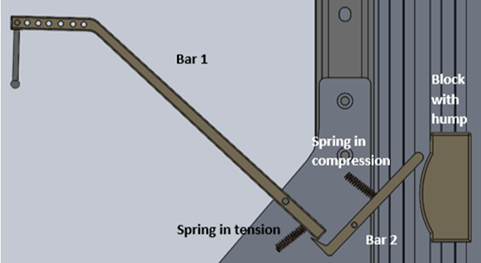
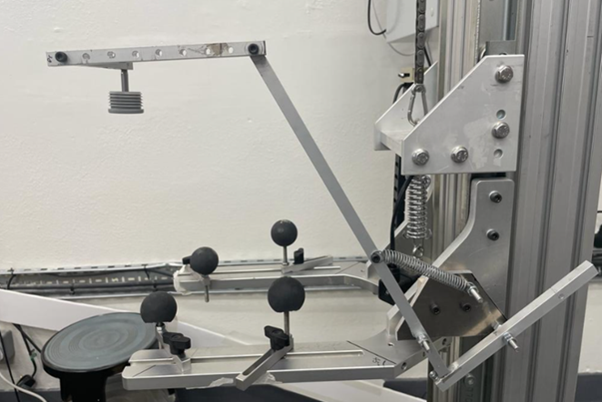
The gripper assembly was manufactured almost exclusively from 12x12mm aluminium struts for machinability and low density. Several M6 holes are drilled along the length of the gripper bar to allow easy customisation of its size for a range of helmet sizes. A single extension spring holds the trigger bar in tension, released on collision with the trigger.