Design, Make and Test · Formula Student 2023
Formula Student Suspension
- At a glance
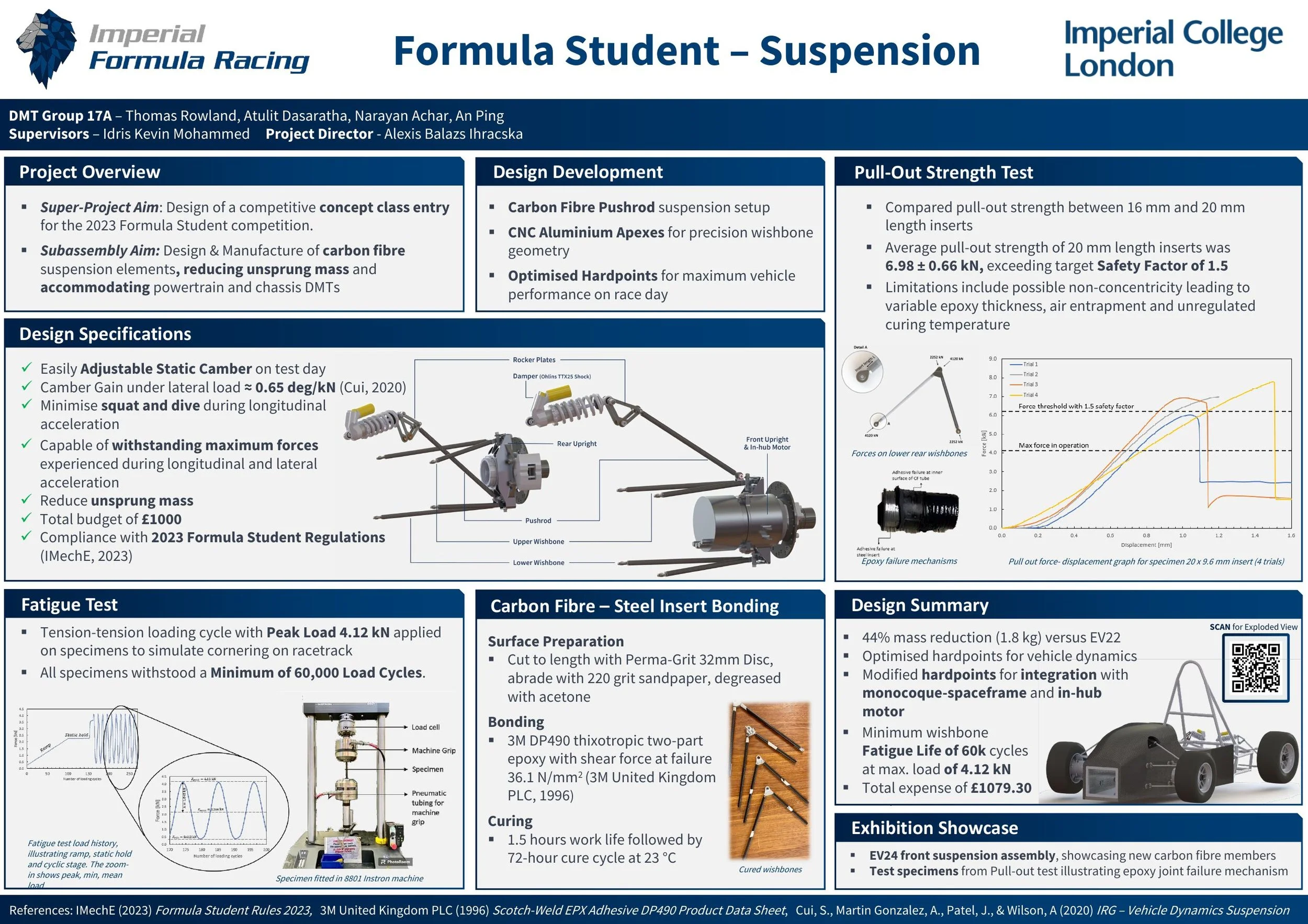
- 44% (1.8 kg) suspension mass reduction across all four corners · bonded 20 mm inserts with safety factor >1.5 at 4.12 kN · every fatigue specimen survived ≥60,000 cycles at 10 Hz · £1,079 total spend
- Methods
- Carbon fibre / aluminium wishbone design, suspension geometry, adhesive joint characterisation, Instron tensile and fatigue testing
What?
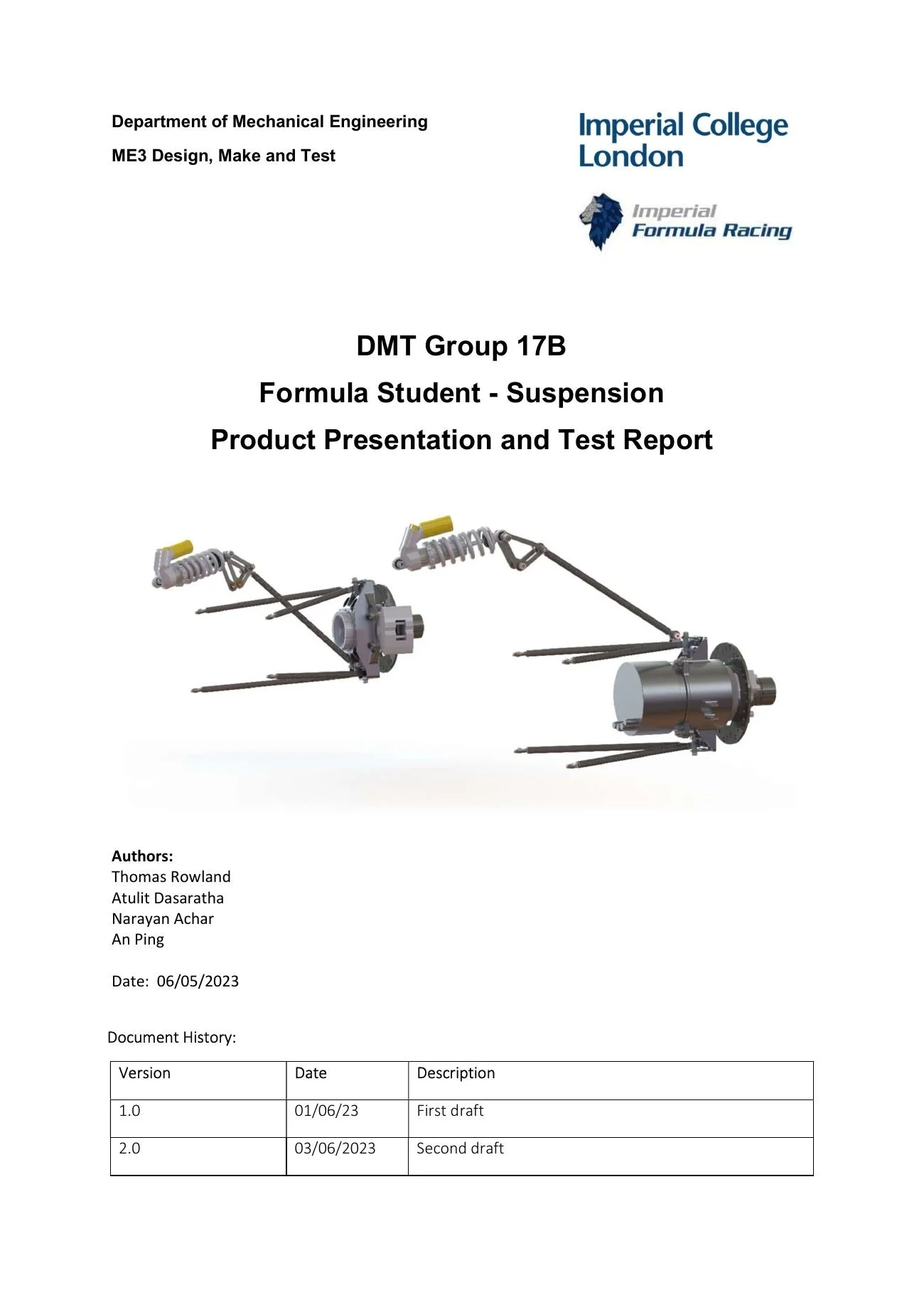
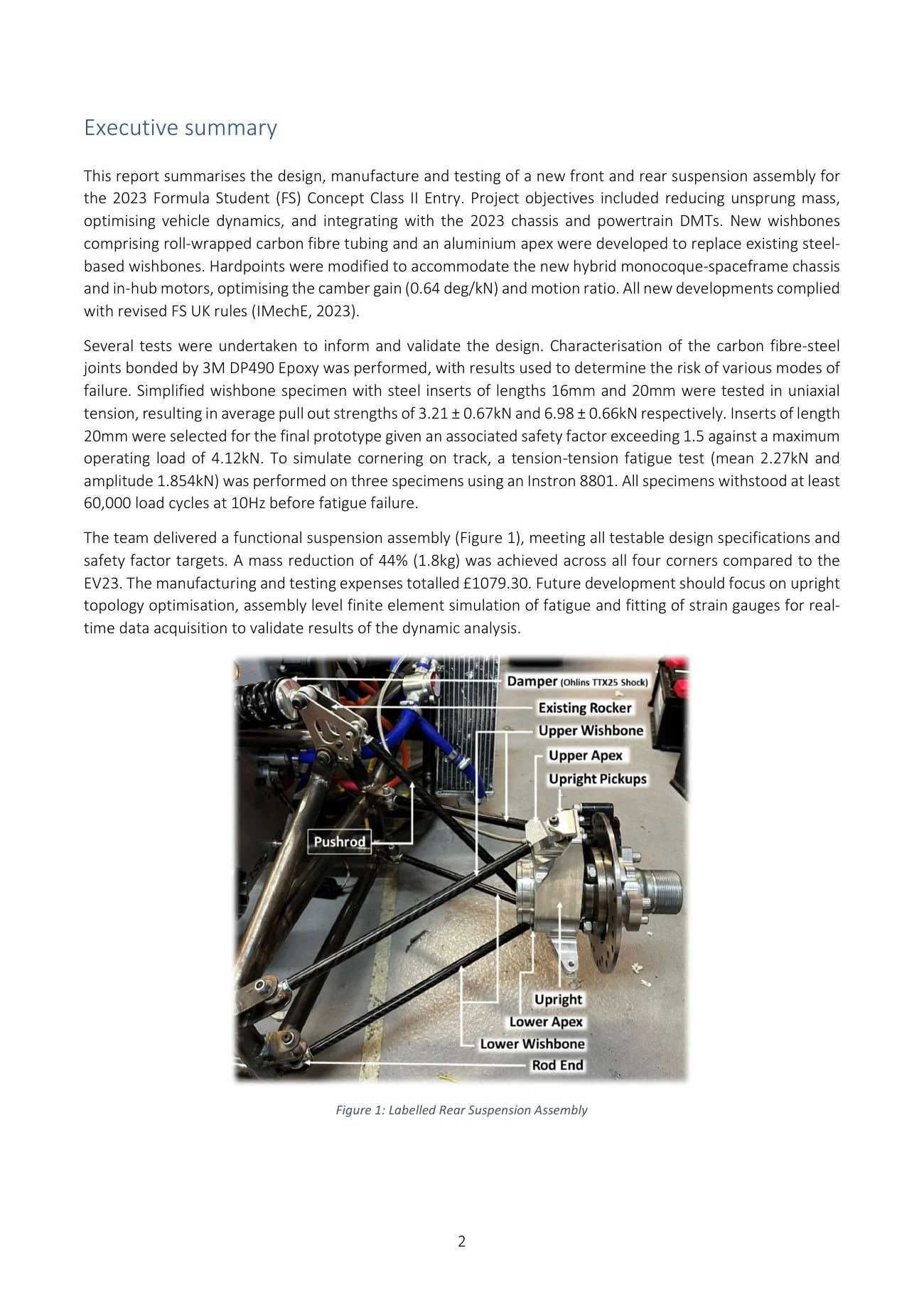
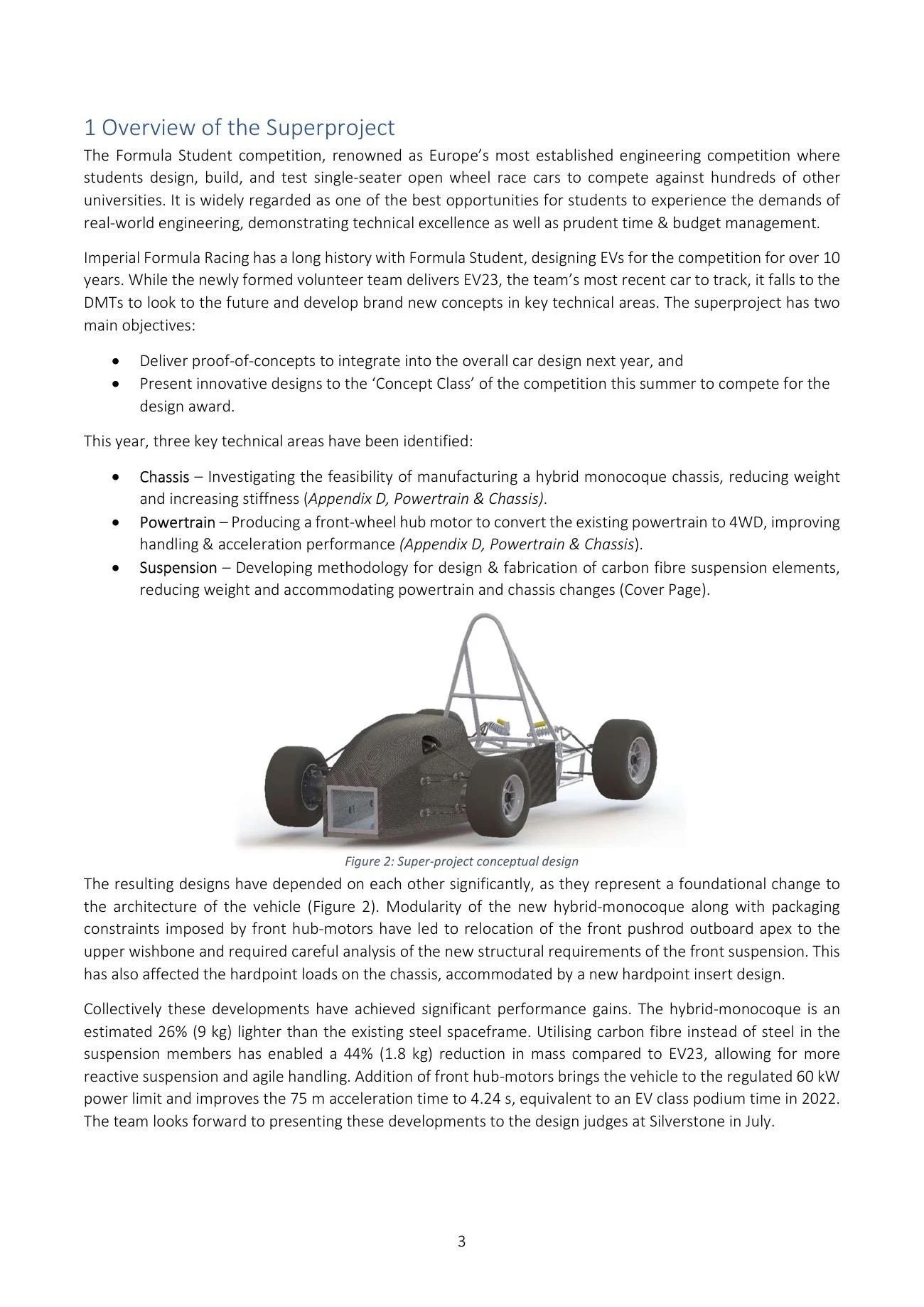
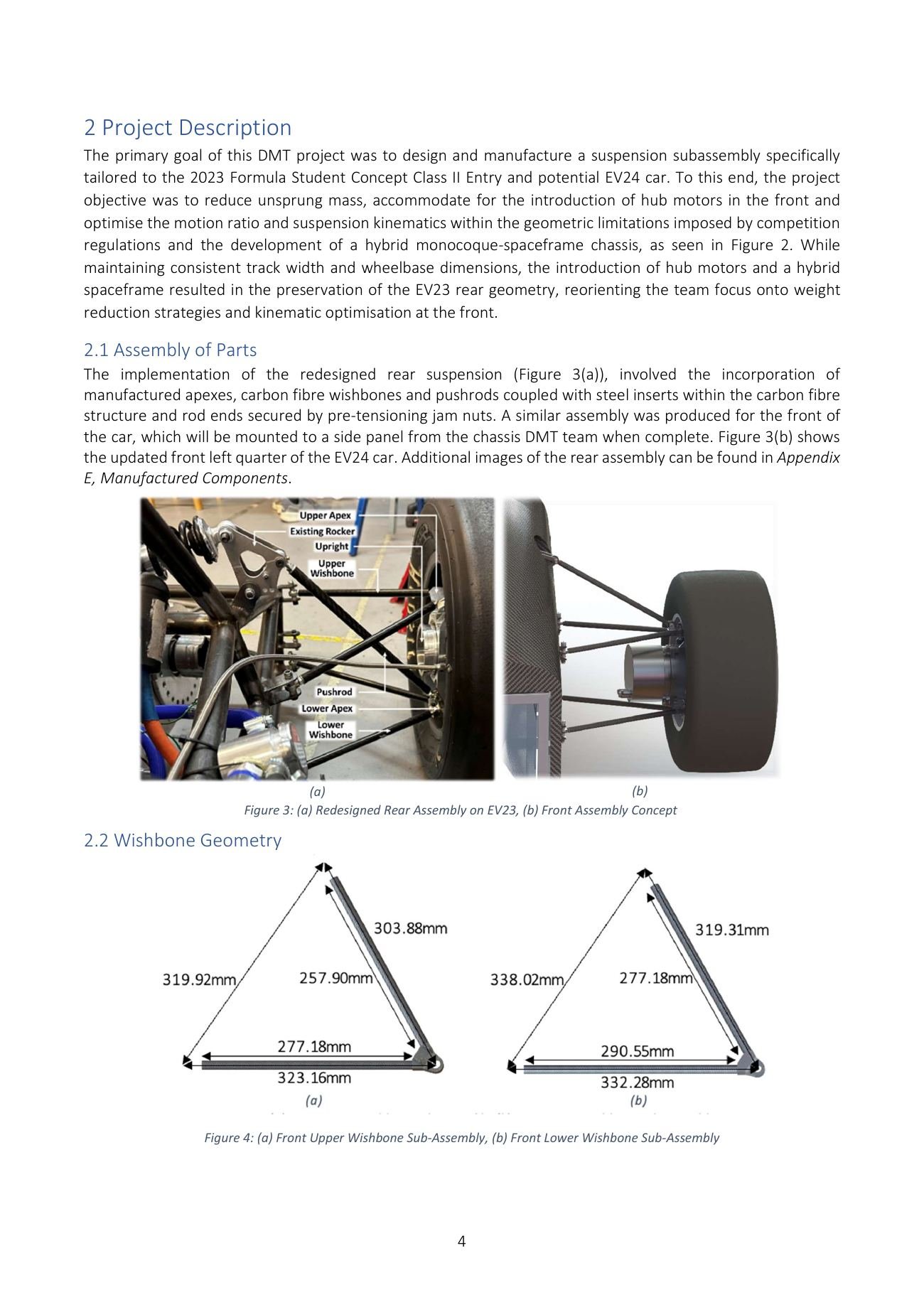
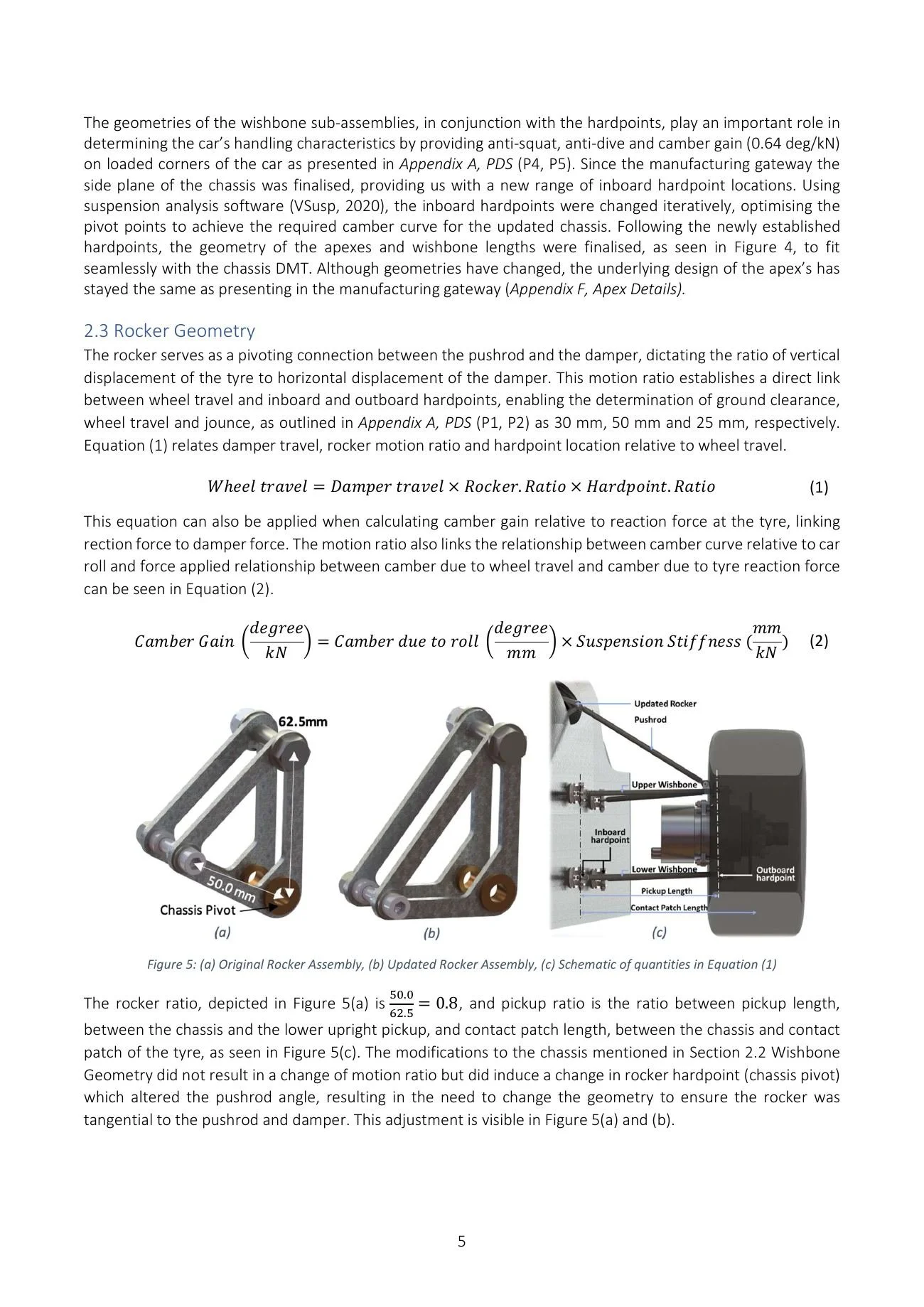
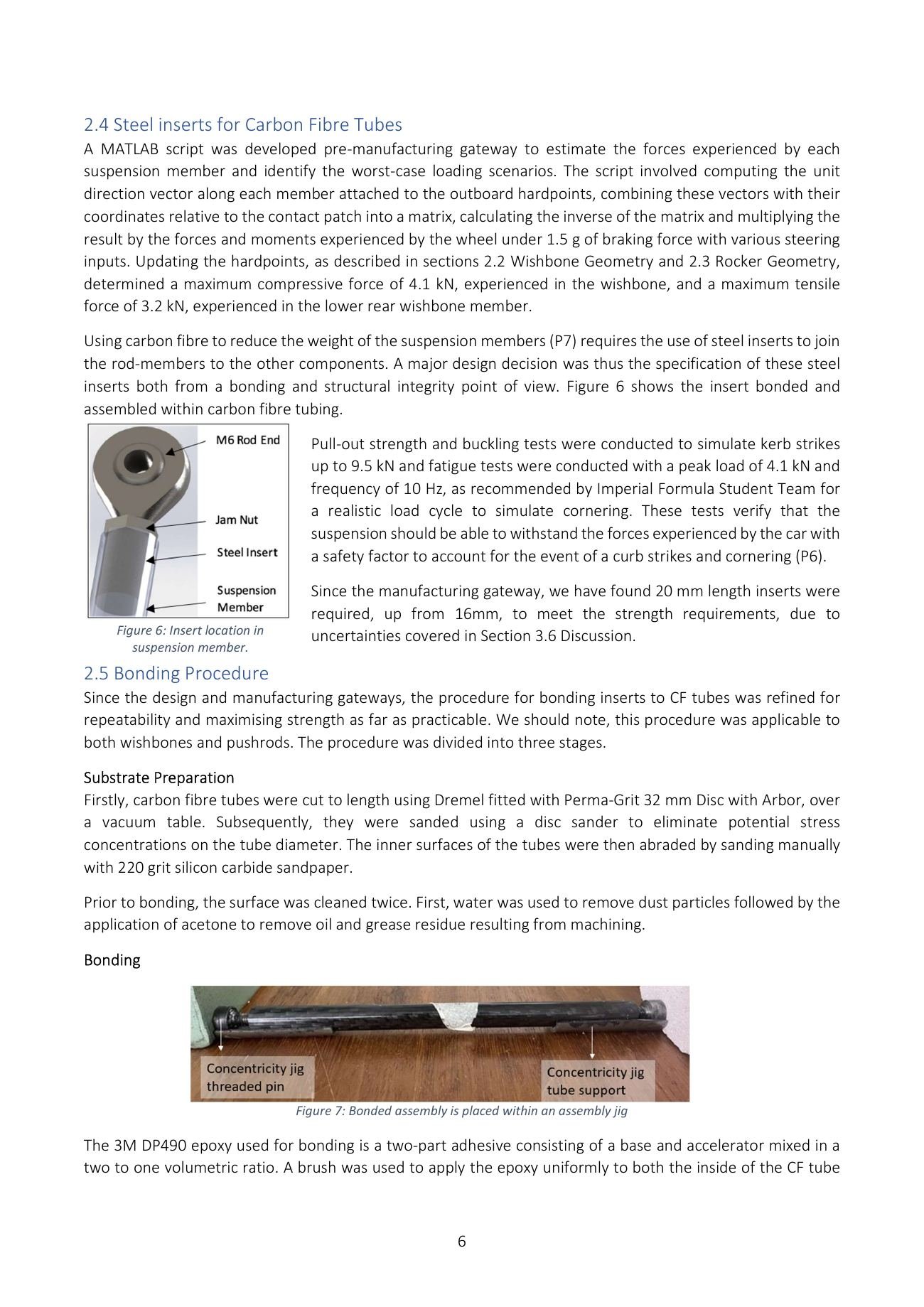
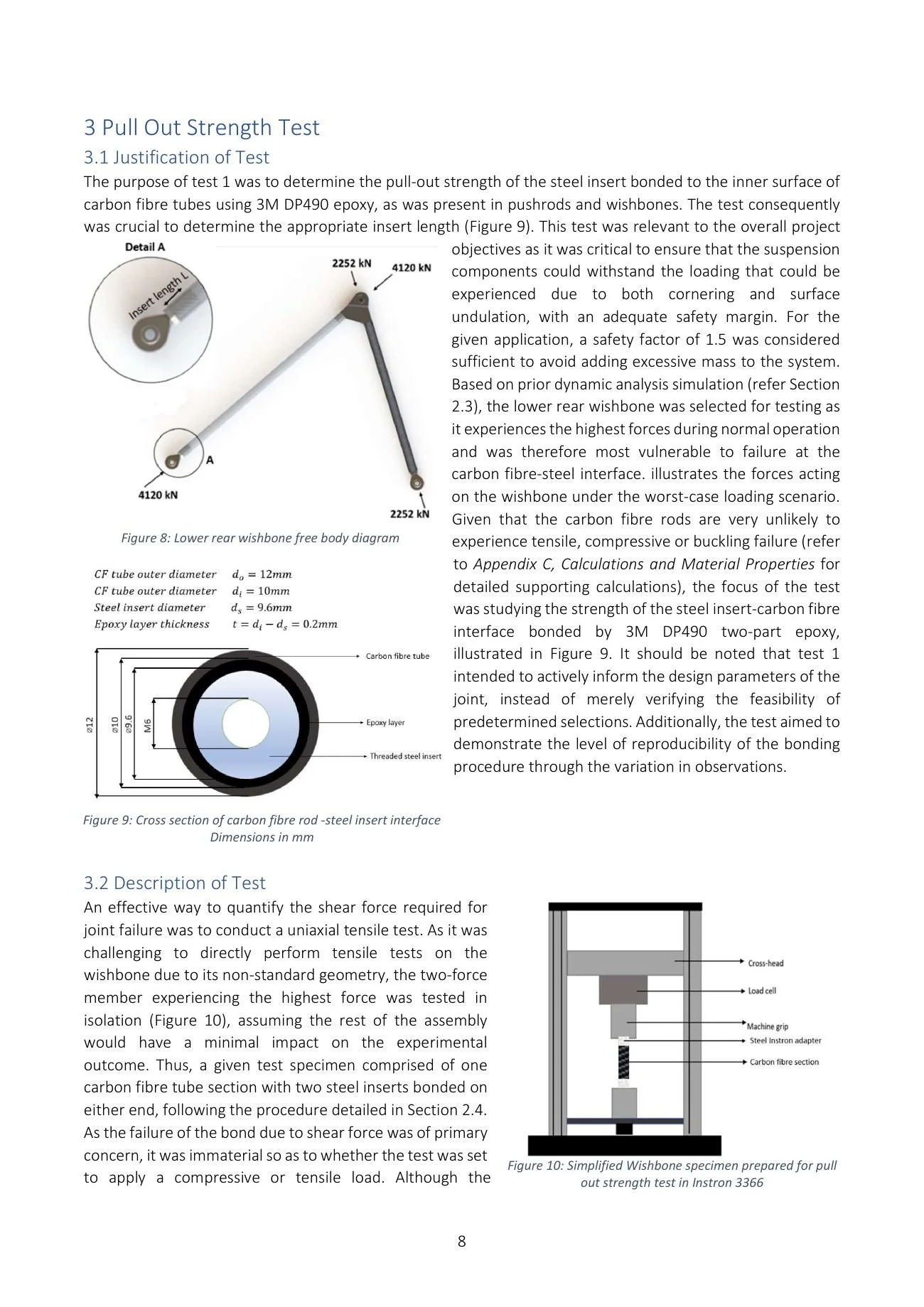
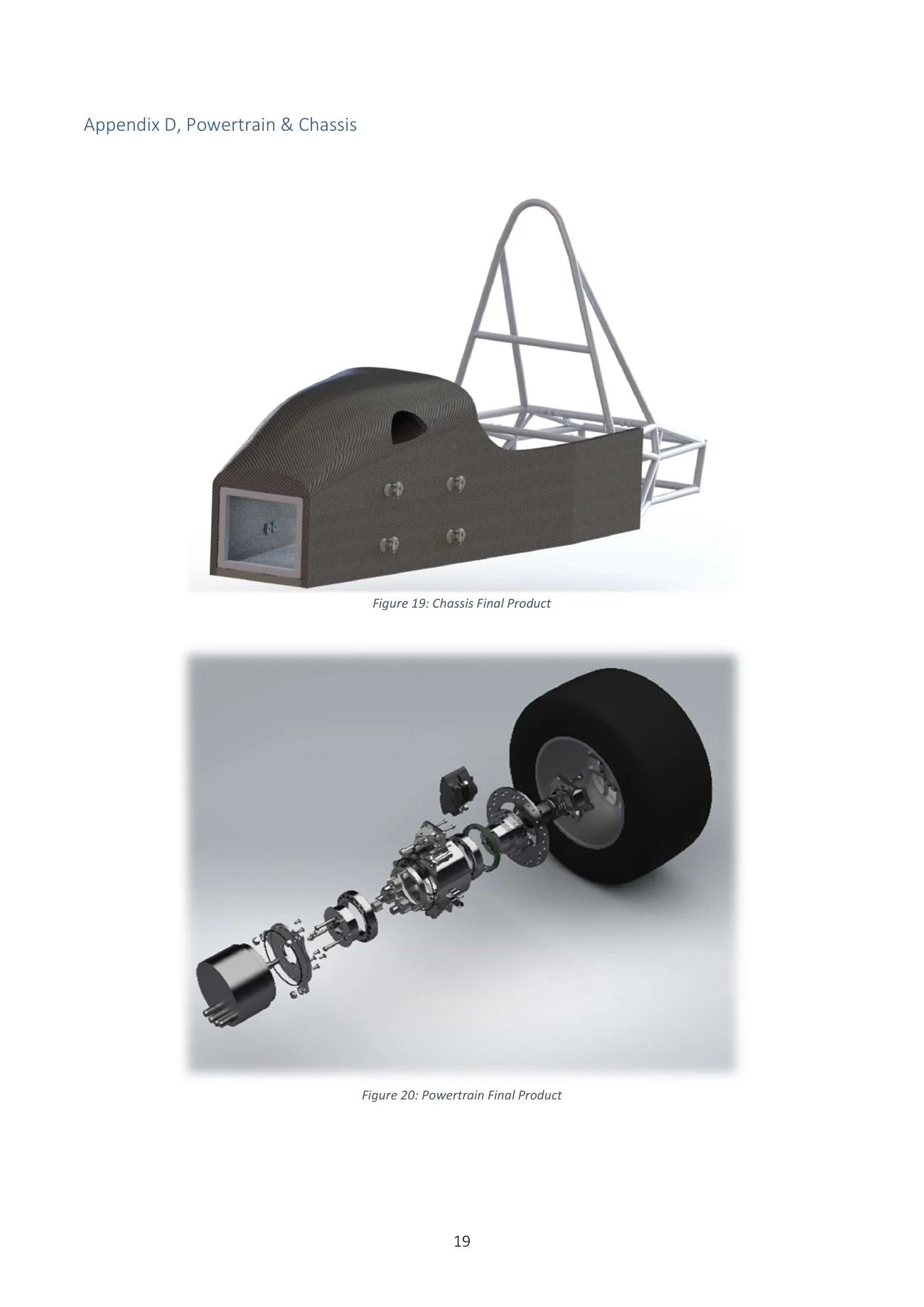
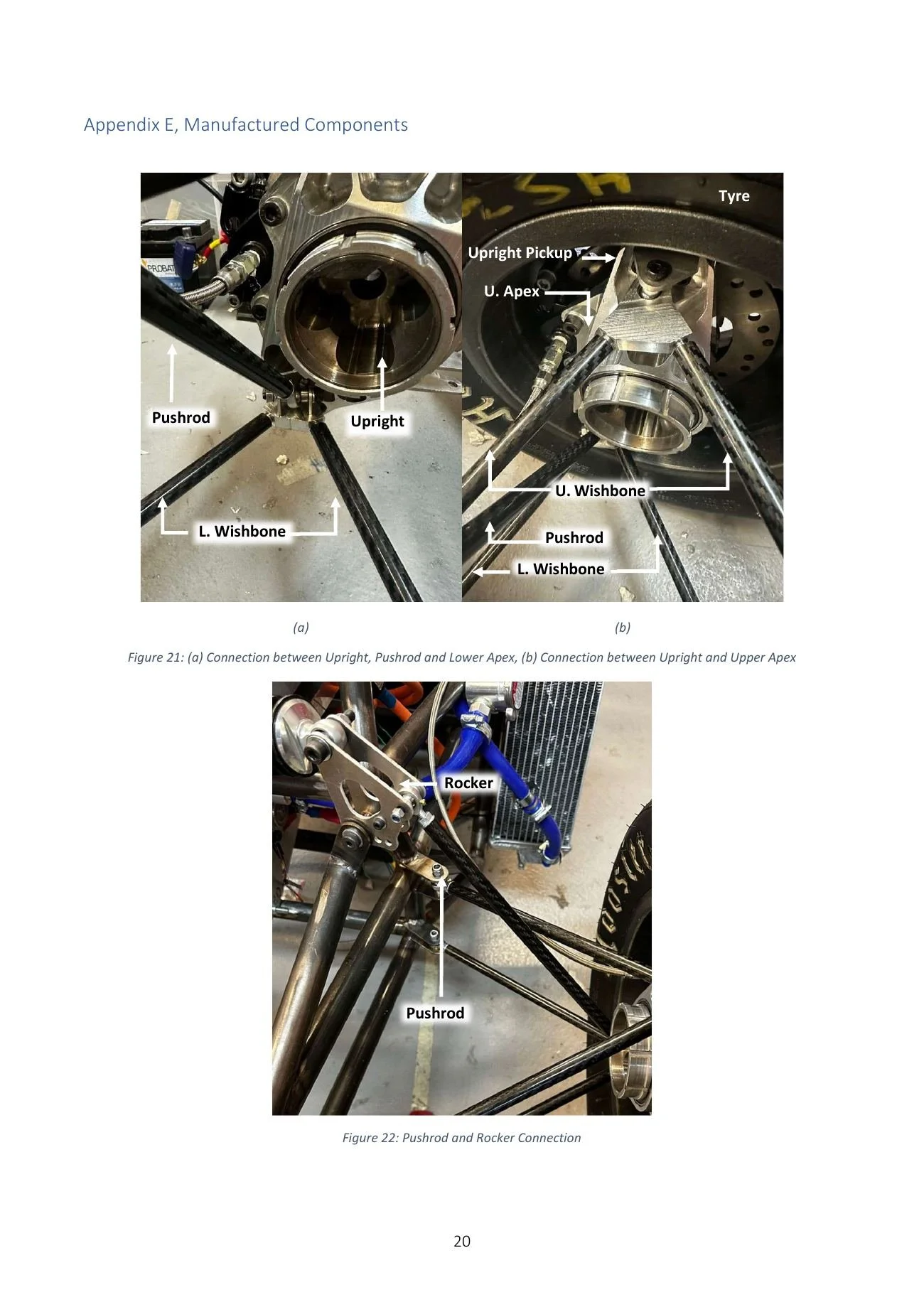
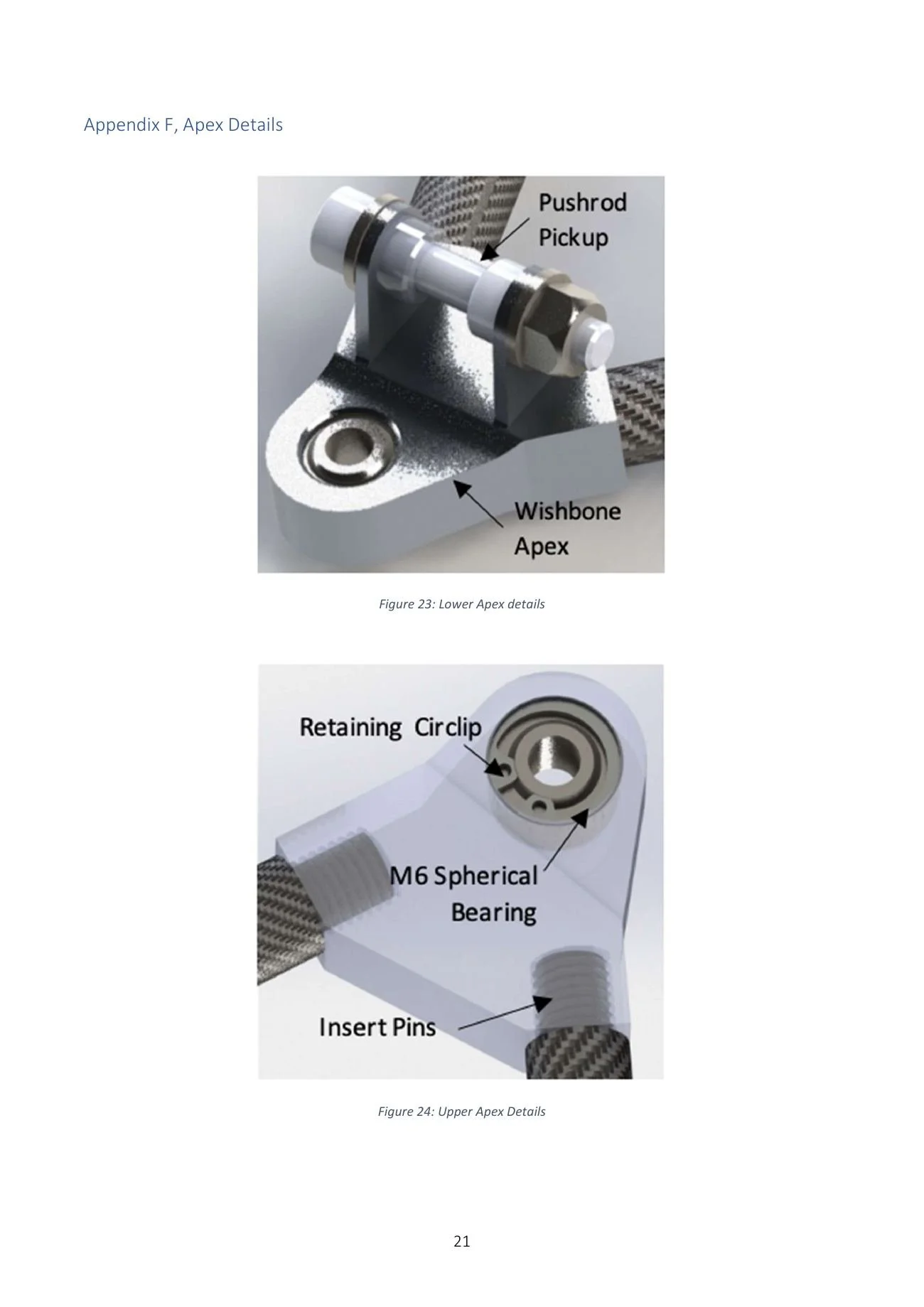
This report summarises the design, manufacture and testing of a new front and rear suspension assembly for the 2023 Formula Student (FS) Concept Class II Entry. Project objectives included reducing unsprung mass, optimising vehicle dynamics, and integrating with the 2023 chassis and powertrain DMTs. New wishbones comprising roll-wrapped carbon fibre tubing and an aluminium apex were developed to replace existing steel-based wishbones. Hardpoints were modified to accommodate the new hybrid monocoque-spaceframe chassis and in-hub motors, optimising the camber gain (0.64 deg/kN) and motion ratio. All new developments complied with revised FS UK rules (IMechE, 2023).
How?
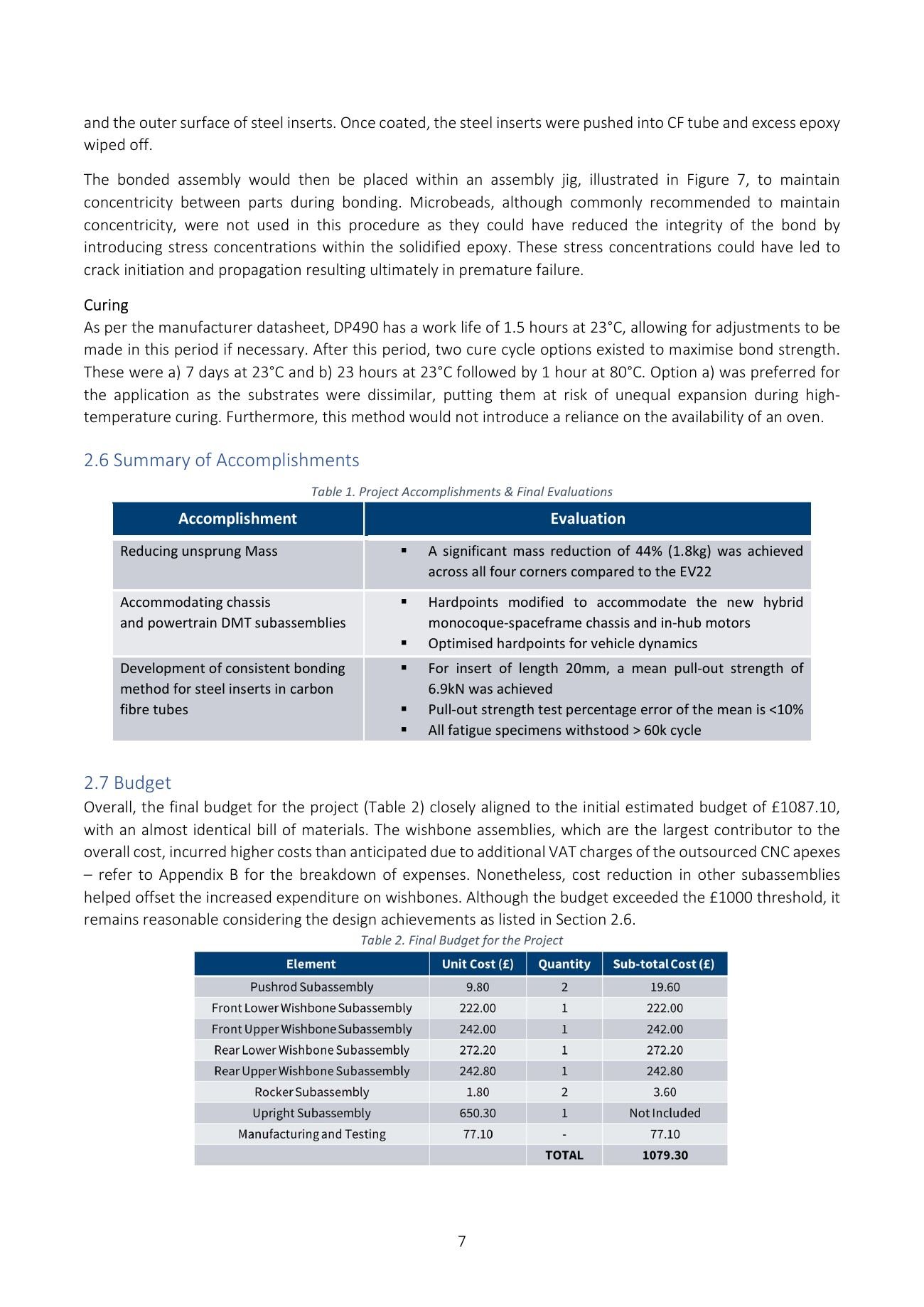
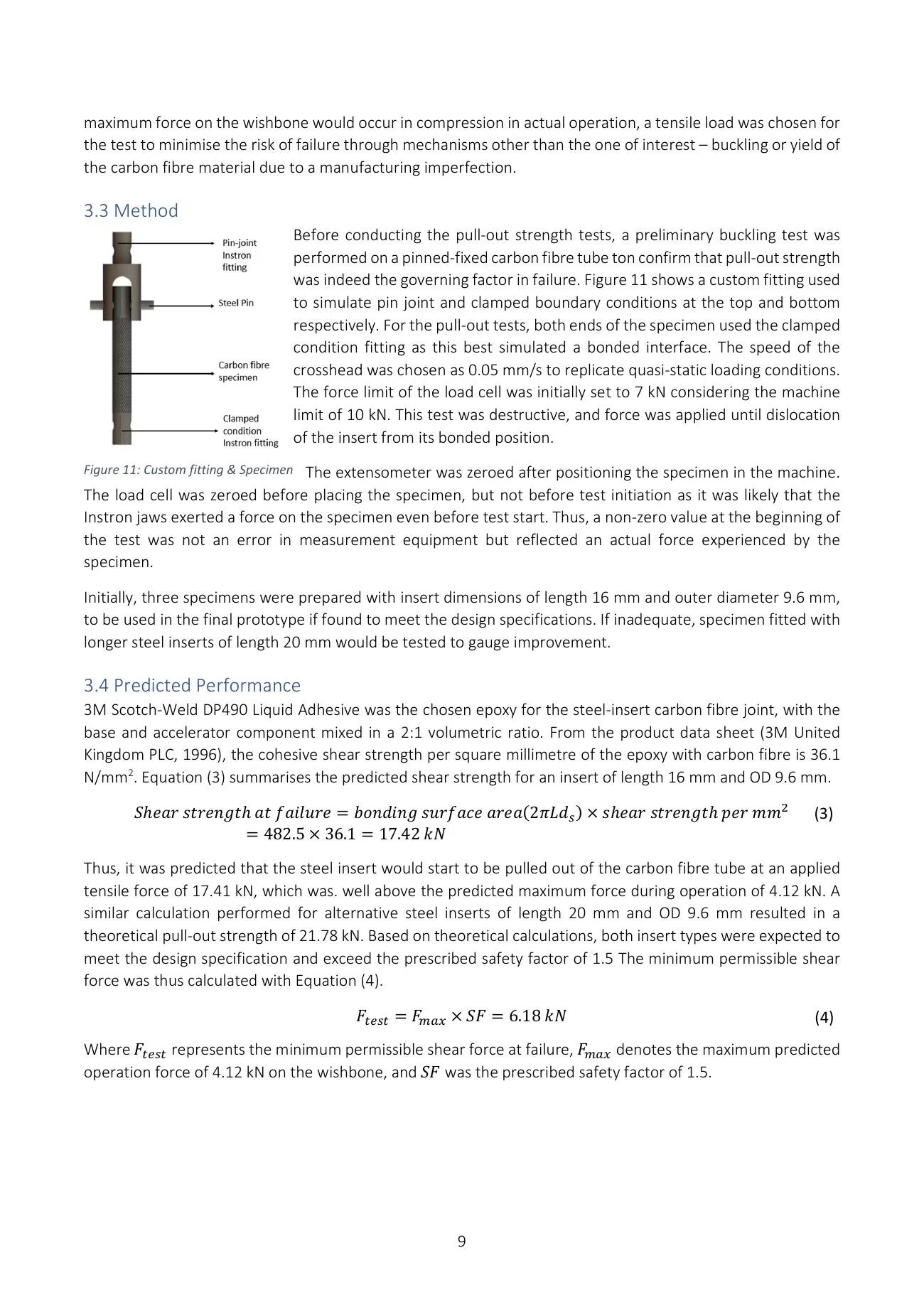
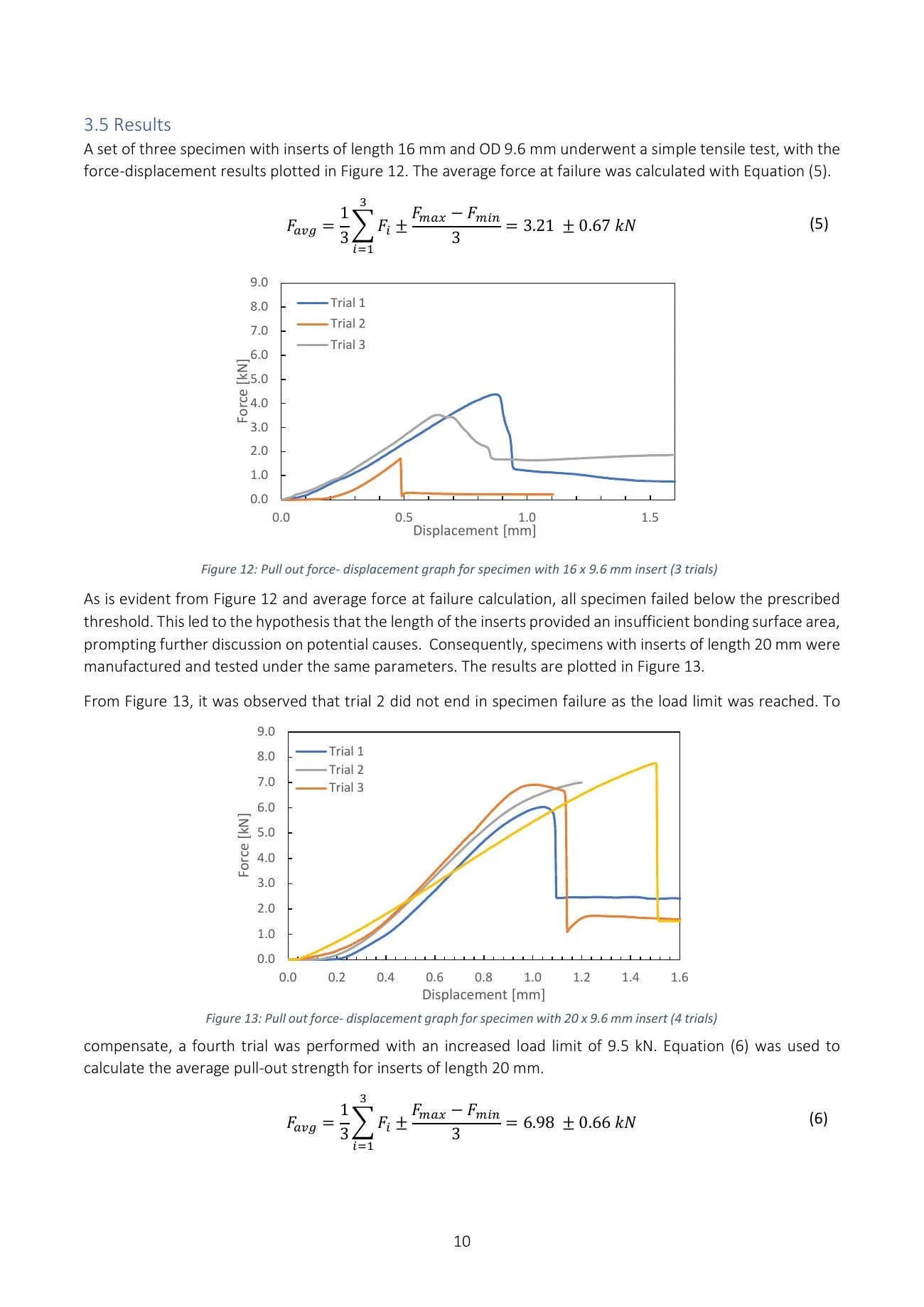
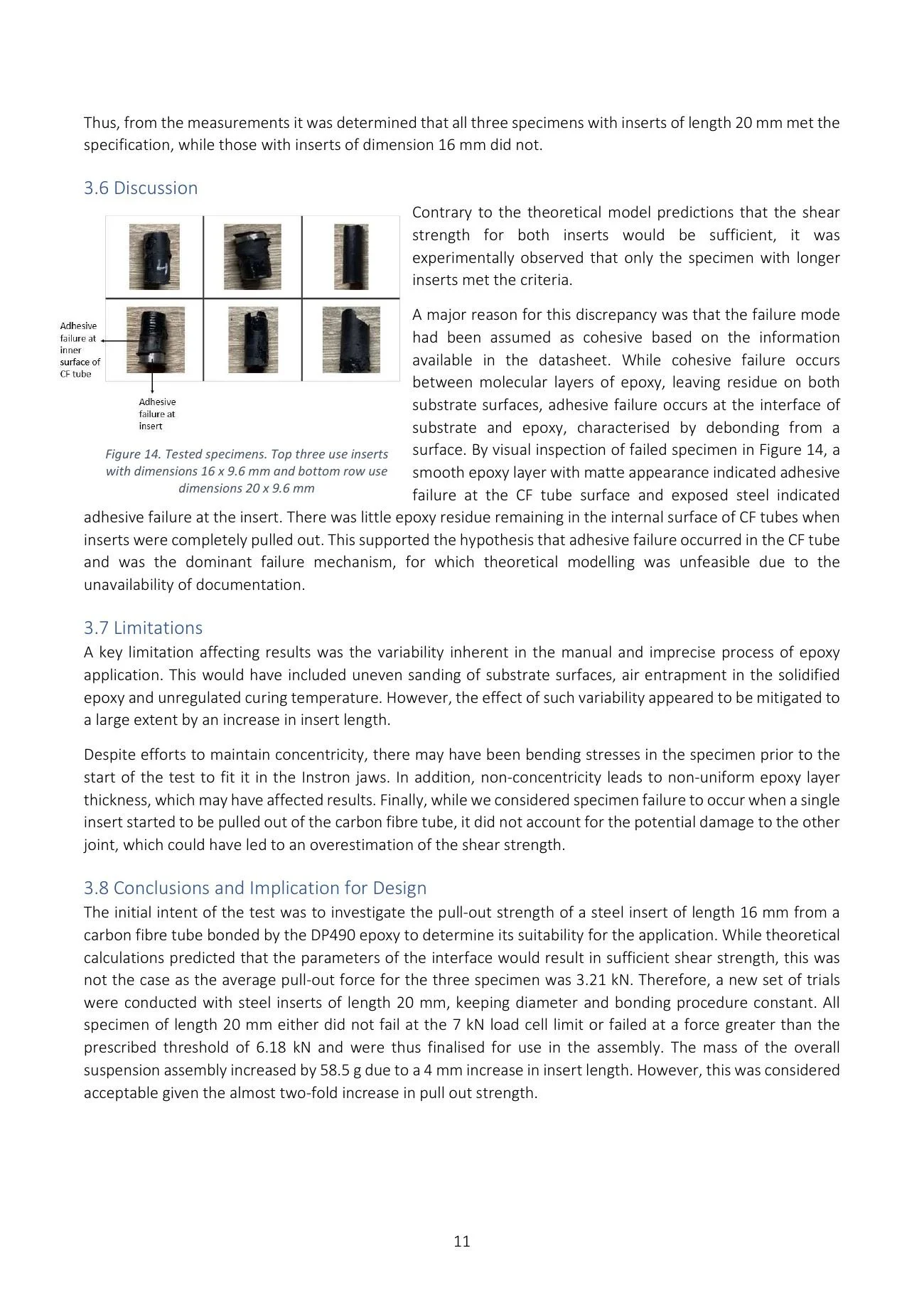
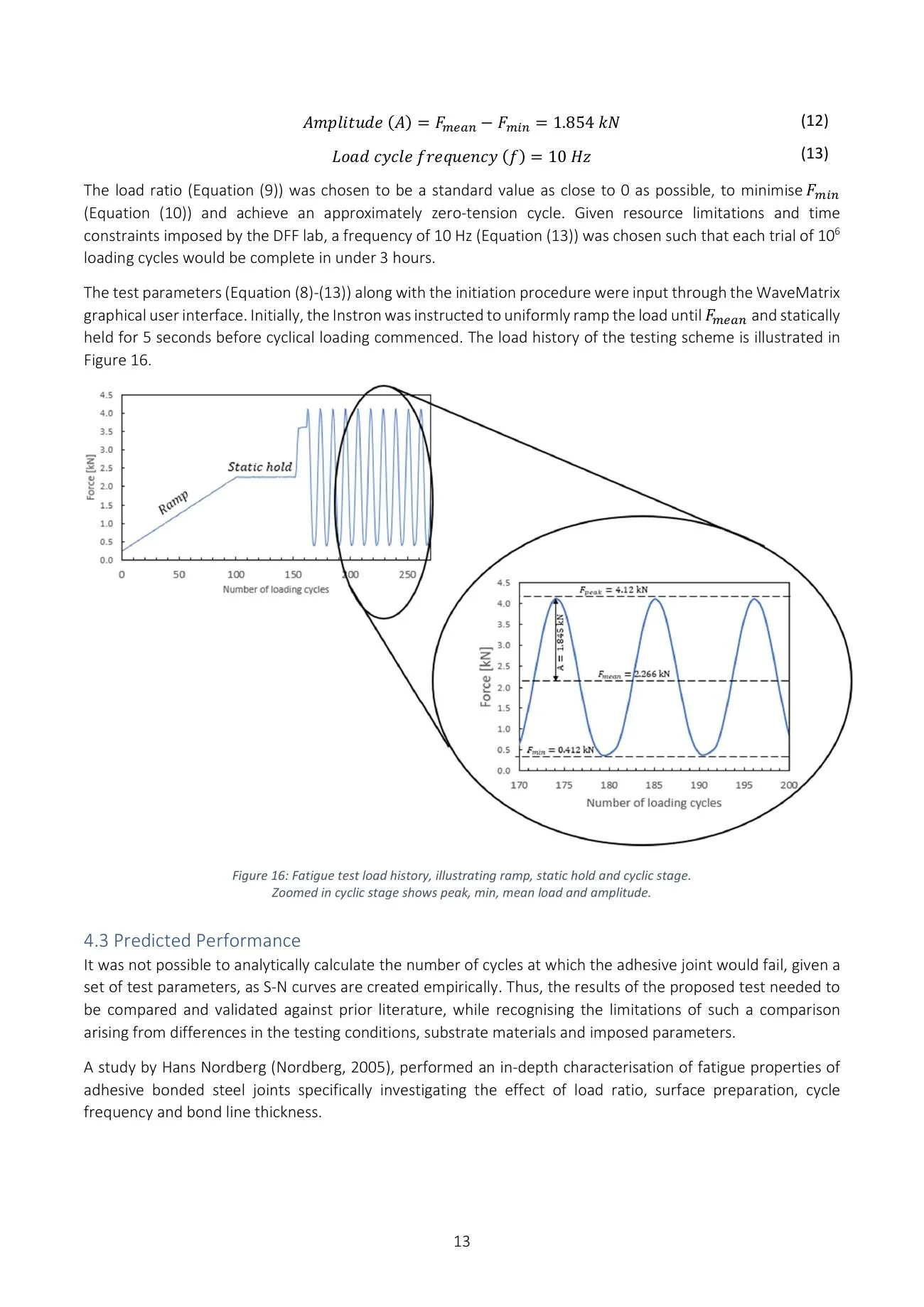
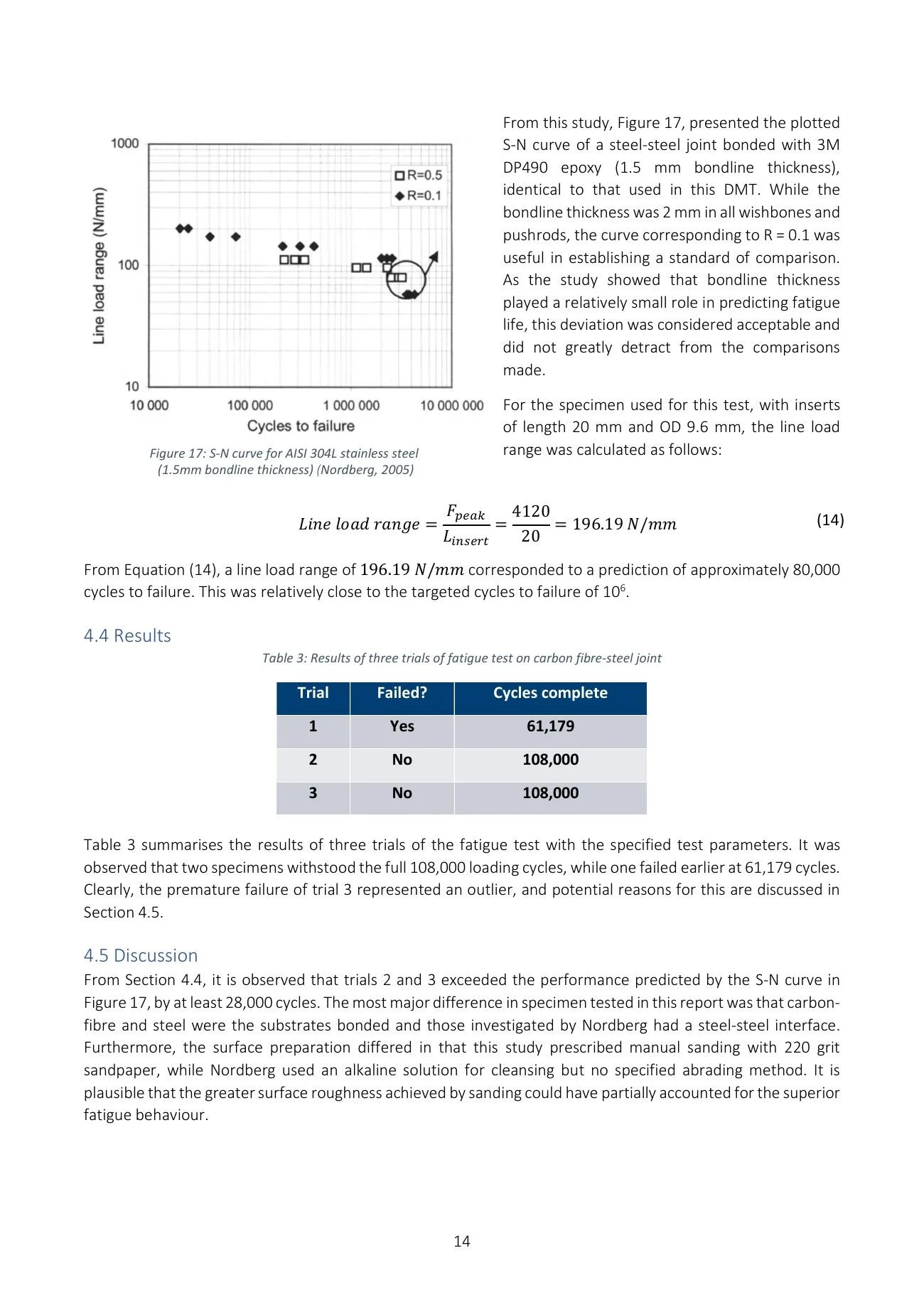
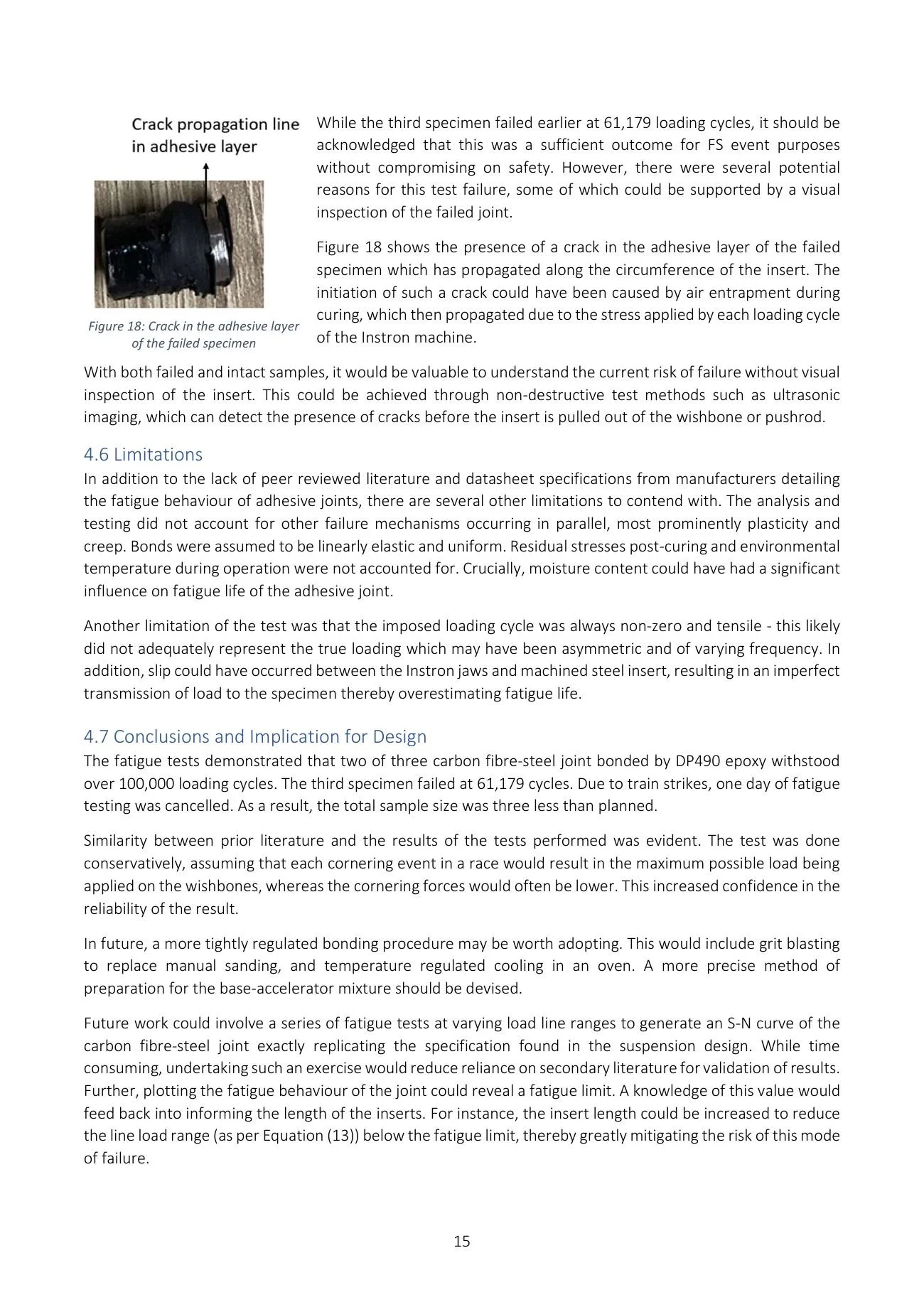
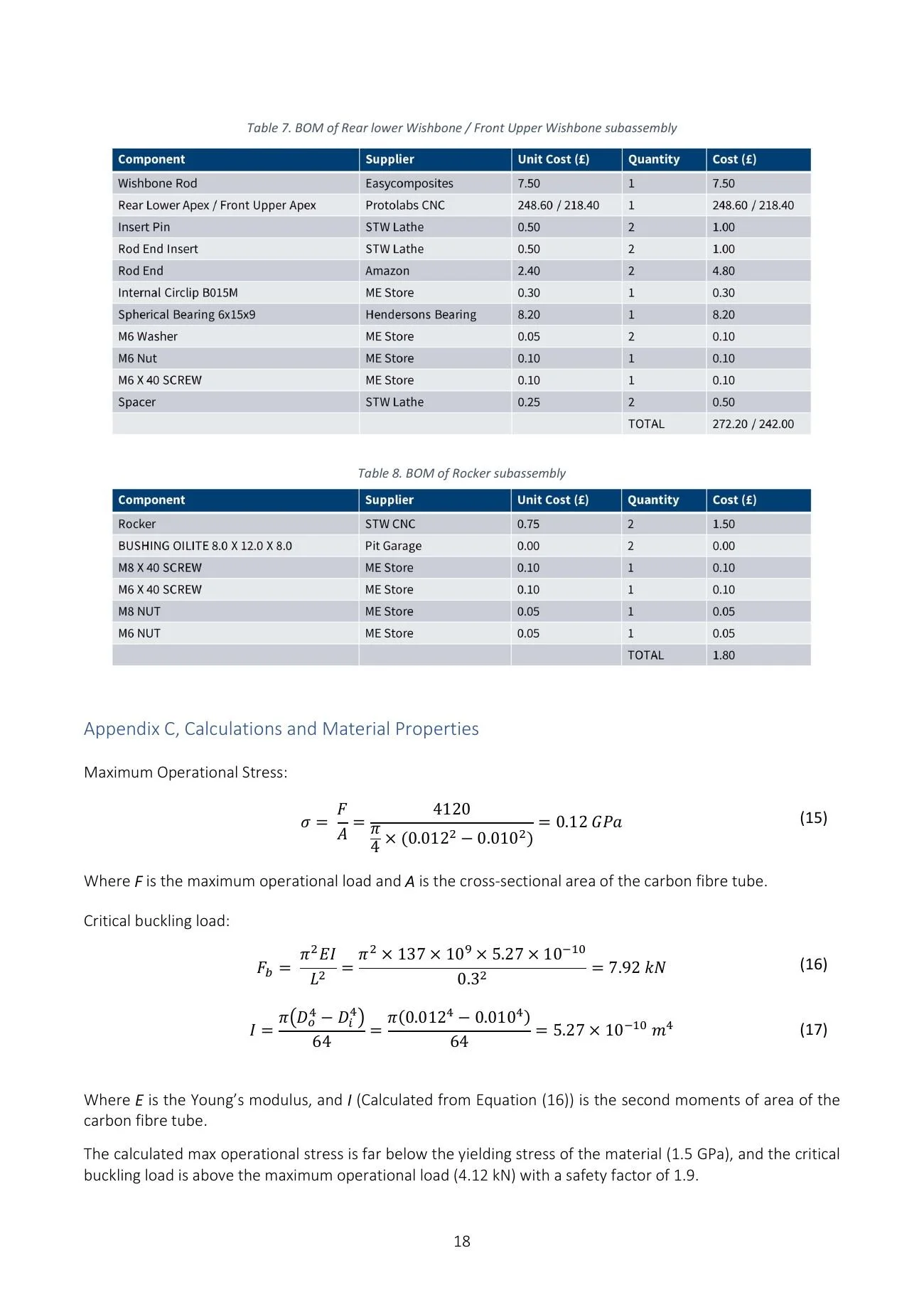
Several tests were undertaken to inform and validate the design. Characterisation of the carbon fibre-steel joints bonded by 3M DP490 Epoxy was performed, with results used to determine the risk of various modes of failure. Simplified wishbone specimens with steel inserts of lengths 16 mm and 20 mm were tested in uniaxial tension, resulting in average pull-out strengths of 3.21 ± 0.67 kN and 6.98 ± 0.66 kN respectively. Inserts of length 20 mm were selected for the final prototype given an associated safety factor exceeding 1.5 against a maximum operating load of 4.12 kN. To simulate cornering on track, a tension-tension fatigue test (mean 2.27 kN, amplitude 1.854 kN) was performed on three specimens using an Instron 8801. All specimens withstood at least 60,000 load cycles at 10 Hz before fatigue failure.
Result
The team delivered a functional suspension assembly meeting all testable design specifications and safety factor targets. A mass reduction of 44% (1.8 kg) was achieved across all four corners compared to the EV23. Manufacturing and testing expenses totalled £1079.30. Future development should focus on upright topology optimisation, assembly-level finite element simulation of fatigue and fitting of strain gauges for real-time data acquisition.
Poster and report